
Wat Arun or its full name is Wat Arun Ratchawararam or The Temple of Dawn, an ancient temple with a rich history, was initially constructed during the Ayutthaya period. Originally named “Wat Makok“, it was later renamed “Wat Chaeng” by King Taksin the Great. King Rama II undertook extensive renovations and bestowed the new name “Wat Arunrattharam”. Subsequently, King Rama IV completed further restorations and renamed it “Wat Arunratchawararam”, its full official title.
Significance of the Wat Arun Ratchawararam temple
As a premier royal temple, Wat Arun holds immense cultural and historical significance. Situated within the former Grand Palace complex, it once served as the home of the Emerald Buddha during the Thonburi period. A cherished royal tradition, the Chakri kings have consistently made annual pilgrimages to the temple by boat to offer Kathin robes.
Key Attractions
1. Chapel or Ubosot(Thai language): Constructed during the reign of King Rama II, the ubosot houses the principal Buddha image, “Phra Phutthammisararach-Lokadhatu Dilak”. This seated Buddha, believed to have a face sculpted by the king himself, is revered for its intricate craftsmanship.
2. Principal Buddha Image: The temple hall features a magnificent seated Buddha named “Phra Phuttha Champunuth Mahaburusalakkhana Asitayananubpit”. Cast in bronze and adorned with gold leaf, this Buddha was created concurrently with a similar image at Wat Suthat Thepwararam, under the patronage of King Rama III.
3. Phra Arun: Also known as the “Dawn Buddha”, this seated Buddha is made of various types of gold and is a focal point of the temple. Alongside it is a Sukhothai-era Buddha image enshrined on a pedestal.
4. Stupa or Phra Prang(Thai language): The temple’s iconic prang is constructed from brick and adorned with exquisite porcelain, earthenware, and seashells, featuring intricate floral and leaf motifs. The prang culminates in a gilded spire reaching a height of 67 meters.
5. Gabled Gateway: Built during the reign of King Rama III, this four-faced gateway is adorned with tiers of colored glazed tiles and topped with a crown-shaped finial.
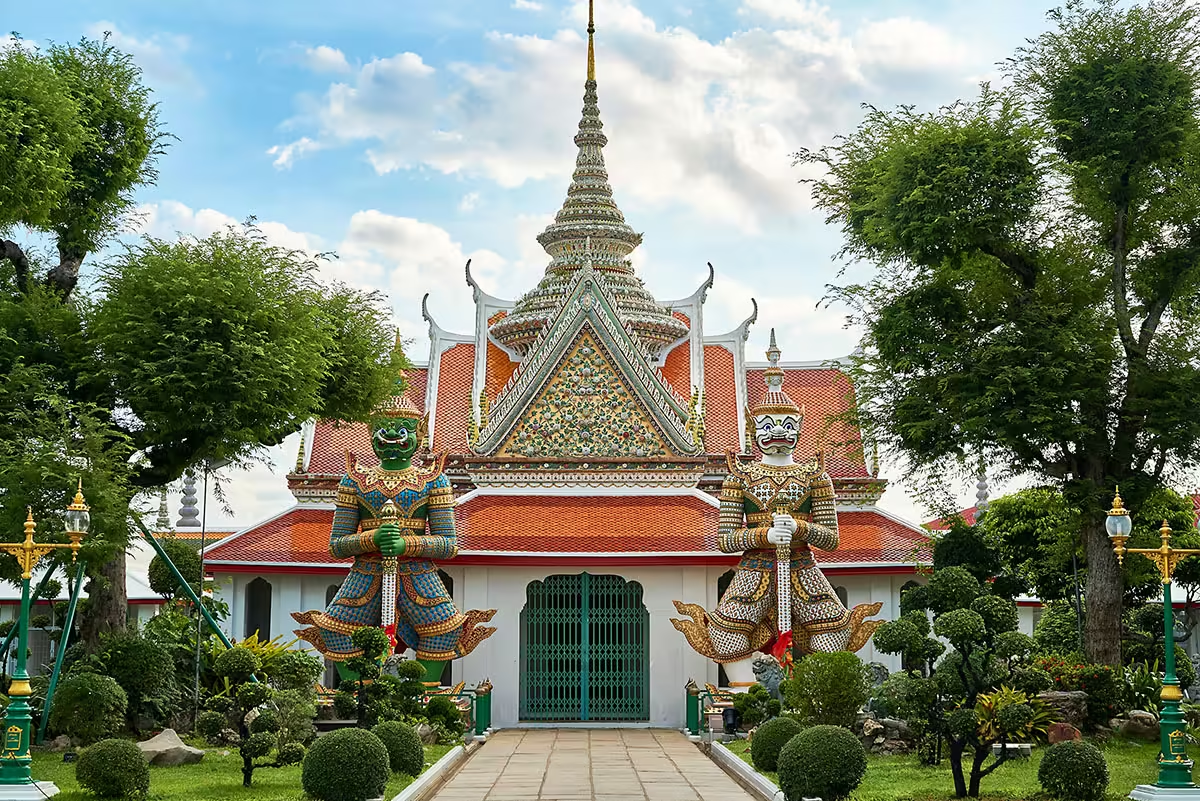
6. Standing giant statue: Flanking the gabled gateway are two colossal statues representing the giants Sahasadecha (white) and Thotsakan (green).
7. The Buddha’s Footprint Replica Pavilion is located between the Ubosot and the Vihara. Inside is a replica of the Buddha’s footprint carved from stone from Guangdong.
8. Chinese-style Pavilions: Six elegant pavilions grace the temple’s waterfront, built during the reign of King Rama III.
9. Smaller temple or Wihan (Left): This small temple houses the Buddha’s relics, constructed during the reign of King Rama IV. It is believed that the original Emerald Buddha was temporarily enshrined here before being moved to the Temple of the Emerald Buddha.
10. Smaller temple or Wihan (Right): This small temple a statue of King Taksin and an ancient Buddha image from the Ayutthaya period known as Luang Pho Rung Arun.
Opening-closing hours and entrance fees for Wat Arun Ratchawararam Ratchaworawihan
- Opening-closing hours: Open-close 08.00 – 18.00
- Entrance fee: Free for Thais, 100 baht for foreigners
- Other services: Thai costume rental 200 – 250 baht
How to get to Wat Arun


